Strengthening Personal Data Protection
in Africa:
Toward a Harmonized and Efficient System

The Autorité de Protection des Données à caractère Personnel – APDP is responsible for ensuring the protection of personal data and p
The Commission de l’Informatique et des Libertés (CIL) is an independent administrative authority created by Law No 01 0-2004/AN of 20 April 2004.
The Commission de Protection des Données Personnelles (CDP) is an Independent Administrative Authority (AAI ) established by law no. 2008-12 of 25 ja
The Commission Nationale de contrôle de la protection des Données à caractère personnel (CNDP) was created by law n°09-08 of February 18, 2009 relating to the protection of personal data.
Welcome to the DPA Portal, the main aim of which is to ensure, open and simple communication on data protection at the click of a mouse
The Data Protection Commission (DPC) is an independent statutory body established under the Data Protection Act 2012 (ar
A public office under the aegis of the Ministry of Technology, Communication and Innovation. In operation since February 2009, the date on which it joined the Group.
Created in Montreal in September 2007, in conjunction with the 29th International Conference of Data Protection and Privacy Commissioners, the AF
The HAPDP is an independent administrative authority responsible for ensuring that the processing of personal data complies with the law.
The Information Regulator (South Africa ) is an independent body set up under section 39 of Act 4 on the protection of personal information.
When processing personal data, the ANPDP ensures that human dignity and privacy are respected. It is an ” administrative authority
The National Information Technology Development Agency (NITDA) is committed to implementing the national policy for the information economy.
The Network of African Data Protection Authorities Personal Data Protection Authorities (NADPA/RAPDP) was created in Ouagadougou in September 2016, on the sidelines of the Forum af
The mandate of the Office of the Data Protection Commissioner derives from the Data Protection Act 2019 and includes the following elements
The Personal Data Protection Authority (PDPA) is responsible for ensuring that information technology serves citizens and that it

Smart Africa

Registered office: Africa
Address:
Telephone:

Overview

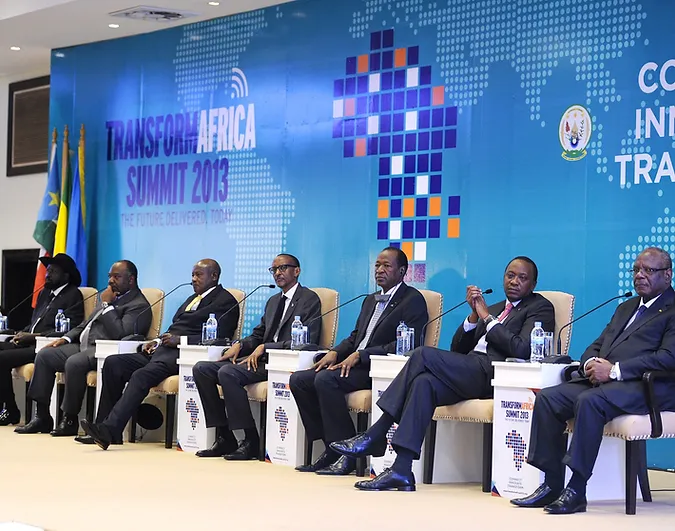
Smart Africa is a bold and innovative commitment by African Heads of State and Government to accelerate sustainable socioeconomic development on the continent, support Africa’s transition to a knowledge-based economy through affordable access to broadband internet access and the use of information and communications technologies. Le Sommet Transform Africa, qui s’est tenu à Kigali, au Rwanda, du 28 au 31 octobre 2013, a débouché sur l’adoption du Manifeste de Smart Africa par sept (7) chefs d’État africains (Rwanda, Kenya, Ouganda, Soudan du Sud, Mali, Gabon, Burkina Faso), qui se sont engagés à jouer un rôle moteur dans l’accélération du développement socio-économique grâce aux TIC.

On January 30 and 31, 2014, the SMART Africa Manifesto was approved by all African Union Heads of State and Government at the 22nd Ordinary Session of the Assembly of the African Union in Addis Ababa. This development places the Manifesto at the heart of Africa’s ICT agenda, beyond the Summit’s original 7 signatories, in all 53 African countries.

Since then, the Smart Africa Alliance has grown to include 32 African countries representing over 815 million people.

The Alliance is a framework for the implementation, monitoring and evaluation of the ede Smart Africa Manifesto, designed to make it a reality. Currently, the Alliance is a partnership bringing together all African countries adhering to the Manifesto, represented by the AU, ITU, World Bank, AfDB, ECA, GSMA, ICANN and the private sector.

In addition to its initial members, other organizations and countries sharing the same vision, interests and objectives will be admitted to the Alliance.

The Smart Africa Alliance is based on five pillars that reflect the five principles of the Smart Africa Manifesto. These pillars are (1) Policy, (2) Access, (3) e-government, (4) Private Sector/Entrepreneurship and (5) Sustainable Development.

The above-mentioned pillars are based on four cross-cutting catalysts that will support the implementation of Smart Africa. These catalysts are (1) Innovation (2) Communication and Advocacy (3) Capacity Building and (4) Resource Mobilization.

The five pillars and four catalysts, when developed and combined effectively, will contribute to economic growth and job creation, which remains the ultimate goal of the Manifesto for a Smart Africa.

Receive the latest news

Subscribe to our newsletter

Be informed of new articles